
Makgdikgadi Salt Pans
Land of Endless Horizons
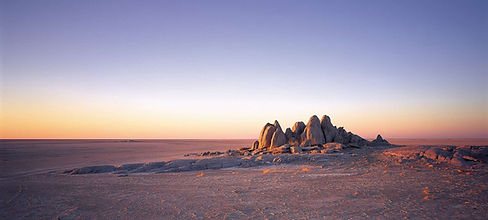
The Makgadikgadi Salt Pans are one of the largest salt flats in the world, located in the heart of Botswana’s Kalahari Desert. These expansive, dry salt flats were once part of a massive inland lake and now provide a surreal and stunning landscape. The pans are best known for their vast emptiness, incredible sunsets, and dramatic contrasts of barren white earth and blue sky. During the wet season, the pans transform into a temporary haven for wildlife, making them an extraordinary destination for adventurous travellers.
Wildlife
-
Migratory Wildlife: The salt pans attract large herds of zebra and wildebeest during the wet season (December to April), as they come in search of water and grazing.
-
Predators: Lions and cheetahs can be spotted hunting the migratory herds, along with hyenas and jackals.
-
Birdlife: Home to flocks of flamingos, as well as black-winged stilts, sociable weavers, and kori bustards, making it a birdwatching hotspot, particularly during the wet season.
-
Desert Adapted Species: Oryx and springbok are well-adapted to the harsh environment, along with meerkats that live in colonies within the arid landscape.
-
Rare Species: The area is also home to the elusive brown hyena and other desert-adapted creatures.

Activities
-
Quad Biking & 4x4 Safaris: Explore the vast salt pans and surrounding desert landscape in quad bikes or 4x4 vehicles for a thrilling experience.
-
Game Drives: Embark on guided game drives, especially during the wet season, to witness the migration of wildlife and predators in pursuit of prey.
-
Walking Safaris: Guided walking safaris allow for an intimate exploration of the pans, providing the opportunity to learn about the area's unique ecology, from ancient tracks to desert flora.
-
Night Drives: With its vast open skies, the Makgadikgadi is a great spot for stargazing, and night drives offer the chance to spot nocturnal wildlife such as bat-eared foxes and owls.
-
Cultural Experiences: Visitors can visit local San communities and learn about their ancient way of life and survival skills in the harsh desert environment.
-
Baobab Exploration: The area is home to some of the world’s most ancient baobab trees, particularly the iconic Chapman's Baobab, which can be explored on foot.
Accommodation
-
Luxury Lodges: Stylish, exclusive lodges offer top-notch service and comfort, many with private plunge pools and stunning views over the salt pans.
-
Tented Camps: For those seeking a more immersive experience, mobile tented camps provide luxury and intimacy in the heart of the desert.
-
Campsites: There are also basic campsites available for a more rustic experience, with access to the salt pans and surrounding wilderness.
-
Eco-Lodges: Several eco-friendly lodges blend seamlessly into the desert environment, offering sustainable and low-impact stays while still providing all the necessary comforts.


Getting there
-
By Air: Maun is the nearest major airport, with charter flights available to airstrips near the Makgadikgadi Salt Pans.
-
By Road: The pans are accessible by road, but 4x4 vehicles are necessary due to the challenging terrain, especially during the wet season when some roads may be impassable.
-
By Light Aircraft: Many lodges offer light aircraft transfers directly from Maun to their airstrips, offering breathtaking aerial views of the salt pans.
Weather & when to visit
-
Dry Season (May–October): This is the most popular time to visit, with wildlife concentrated around waterholes and the weather cooler and more comfortable for exploring the vast desert landscape.
-
Wet Season (November–April): The rainy season brings a dramatic transformation to the landscape, with the pans becoming temporarily flooded, attracting migratory animals and birds. This is also the best time for stargazing, as the clear skies are at their most spectacular.
